


British And Commonwealth Literature
Publisher: Penguin Books
Format: Hardback
ISBN: 0140510346
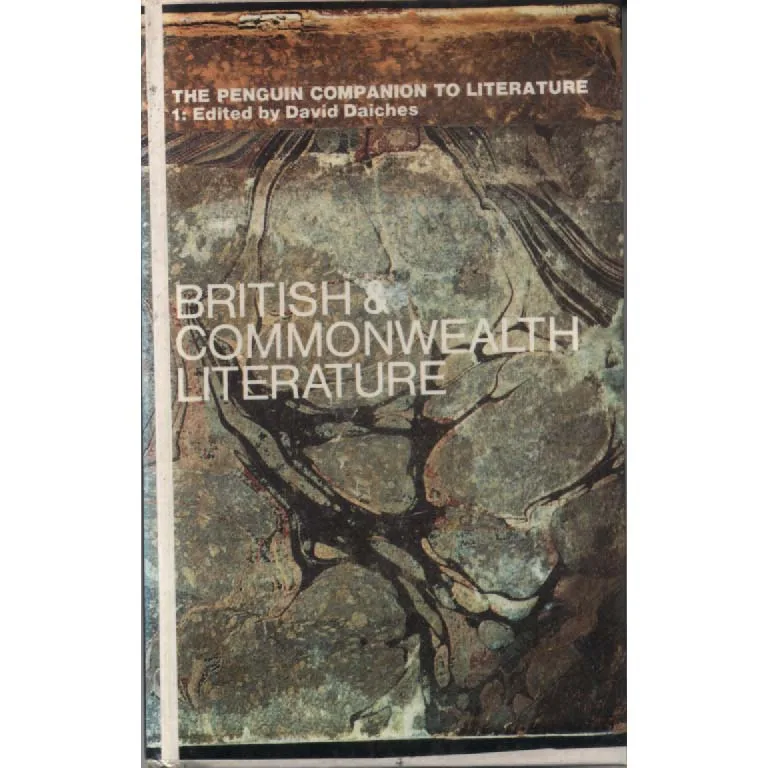
British and Commonwealth Literature (1971) by David Daiches, published by Penguin Books (ISBN: 0140510346), is the kind of paperback that looks modest, behaves authoritative, and quietly implies you should sit up straighter while reading it. It’s in Good condition as sold by Crappy Old Books, which means it’s ready to do what Penguin paperbacks do best: make you feel both educated and slightly behind on your reading.
This is not a cosy “best-loved classics” jaunt. This is a brisk, intelligent survey that takes an enormous, complicated idea — “British and Commonwealth literature” — and tries to hold it all in one hand without dropping anything embarrassing. Which is where the irony begins, because the phrase itself carries a whole historical wardrobe: empire, language, identity, power, inheritance, and the awkward fact that what gets called “literature” often depends on who is doing the calling.
Daiches was one of those critics who could write clearly without dumbing down, and who understood that literary history isn’t just a parade of Great Men With Quills. It’s also about movements, tensions, cultural shifts, and arguments that never really end. So you’re likely to get the canon — the big names, the familiar milestones — but also that broader frame: how English literature became a global phenomenon, how it changed as it travelled, and how writers from across the Commonwealth both inherited and resisted the traditions they were expected to admire.
And because it’s 1971, it has that period flavour: post-war scholarship, confident surveys, and a world still very much negotiating what “Commonwealth” means when the imperial story is no longer being told with a straight face. Reading it now is fascinating because you get two things at once:
-
a genuinely helpful, lucid guide to a huge field, and
-
a snapshot of how that field was being described at the time — what was foregrounded, what was emerging, and what the critical vocabulary looked like before later waves of postcolonial study re-drew the map.
In other words, this book is both a literature guide and a cultural artefact. It can help you understand the tradition, and it can also show you how people once organised the tradition. Like finding an old atlas: still useful, but also quietly revealing about the worldview of the cartographer.
This copy, in Good condition from Crappy Old Books, is ideal for:
-
students and lapsed students who want a smart overview without academic fog
-
readers who like big-picture literary history
-
anyone interested in how “British literature” became something wider, contested, and shared
-
Penguin collectors who enjoy paperbacks that punch above their weight
Expect chapters that give you a framework, names to chase, and that satisfying sense that you’re getting the “shape” of the subject — even if the subject is, by its nature, too sprawling to ever be fully contained.
A Penguin paperback that tries to summarise an empire of words.
Ambitious? Absolutely.
Useful? Very.
Slightly provocative by modern standards? Also yes.
Which, honestly, is half the fun.
Keep browsing: See more Academic books Other books by David Daiches
